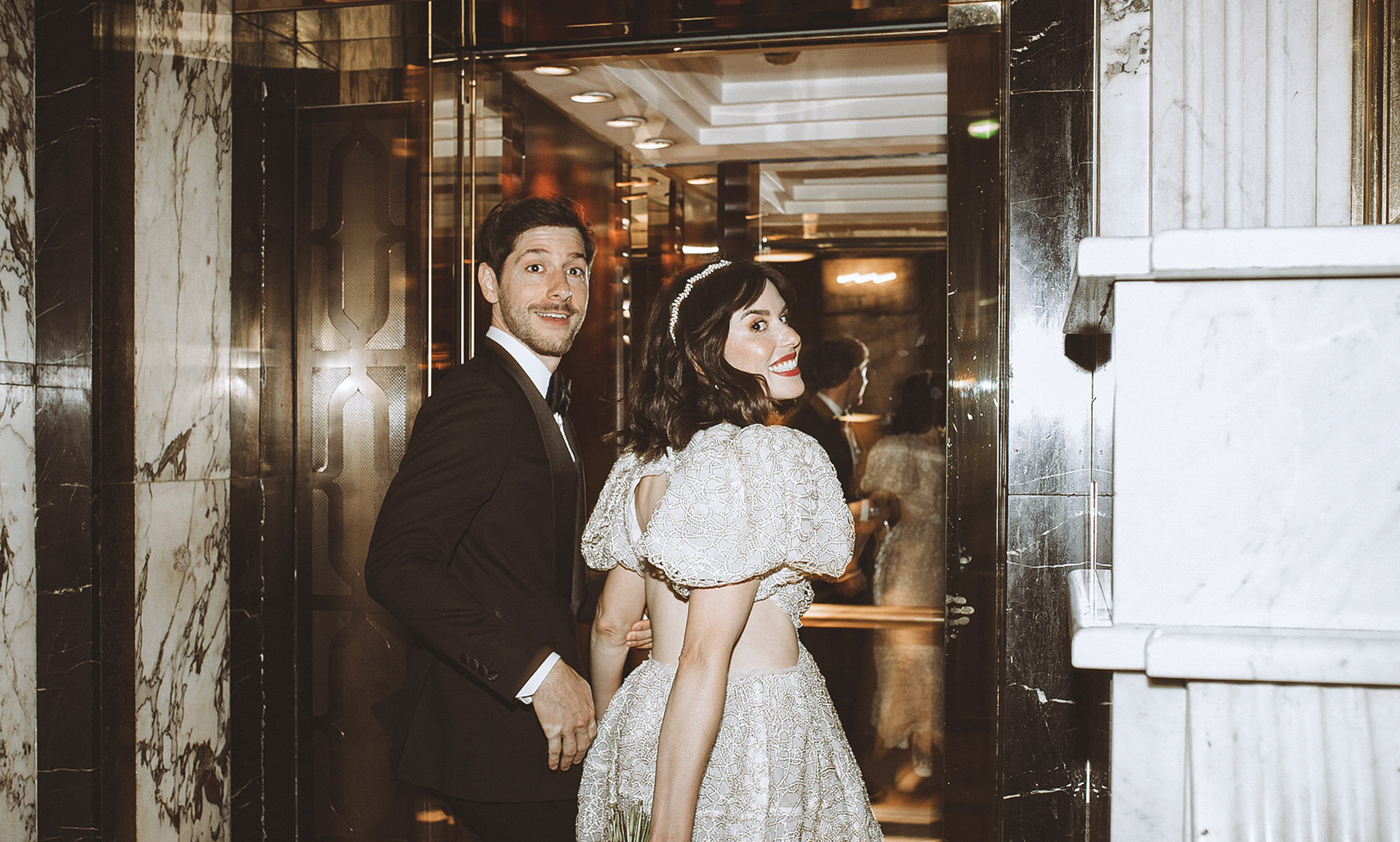
If you've ever scrolled through a wedding gallery and noticed the ceremony photos look great but the reception photos look strange — faces too dark, or the whole room looking flat and washed out — you've spotted a real, common problem. It almost always comes down to one thing: how the photographer handled low light.
Here's what's actually happening, and what it means for choosing (or briefing) your own photographer.
Shooting True to the Room Means Working With the Light You're Given, Not Fighting It
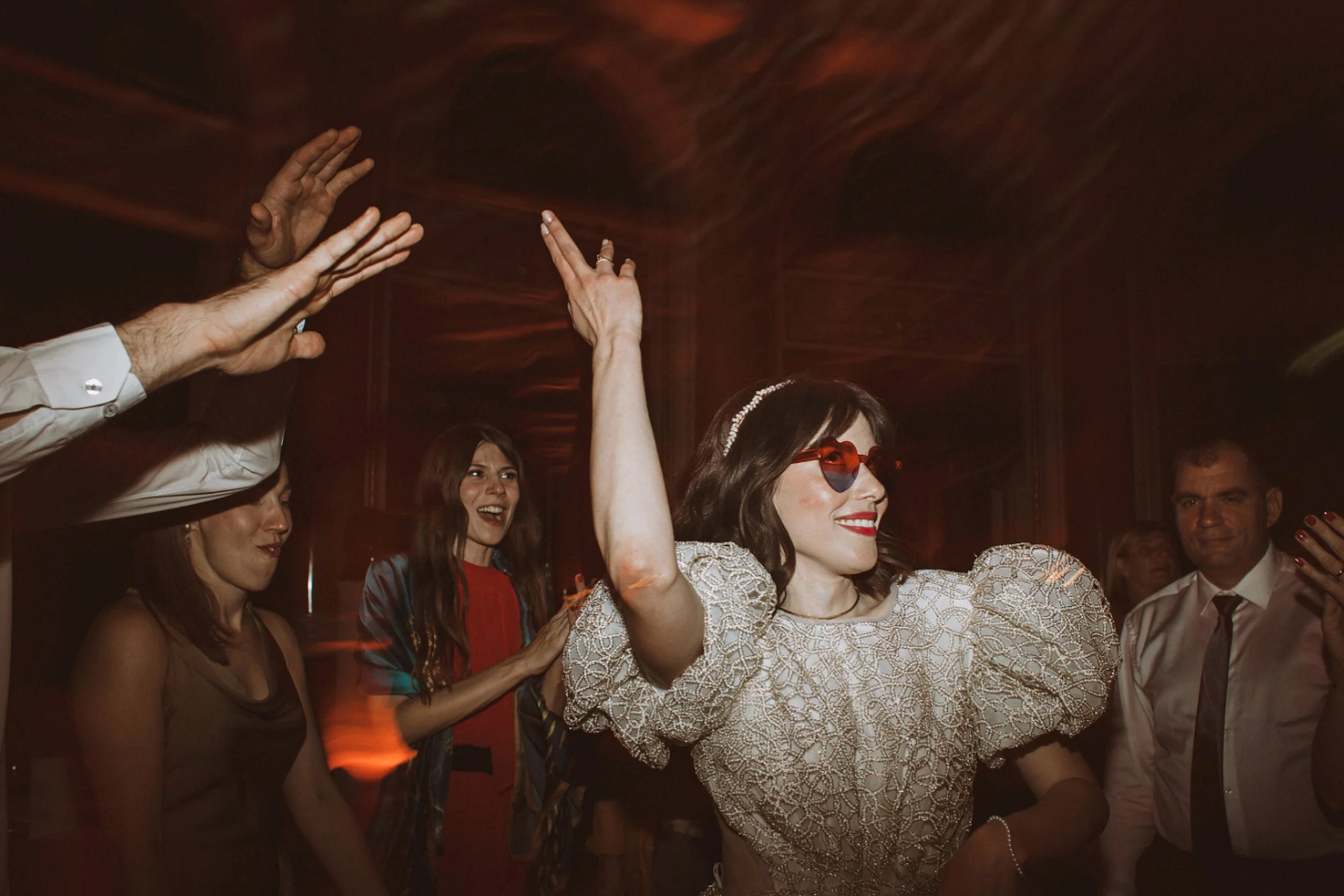
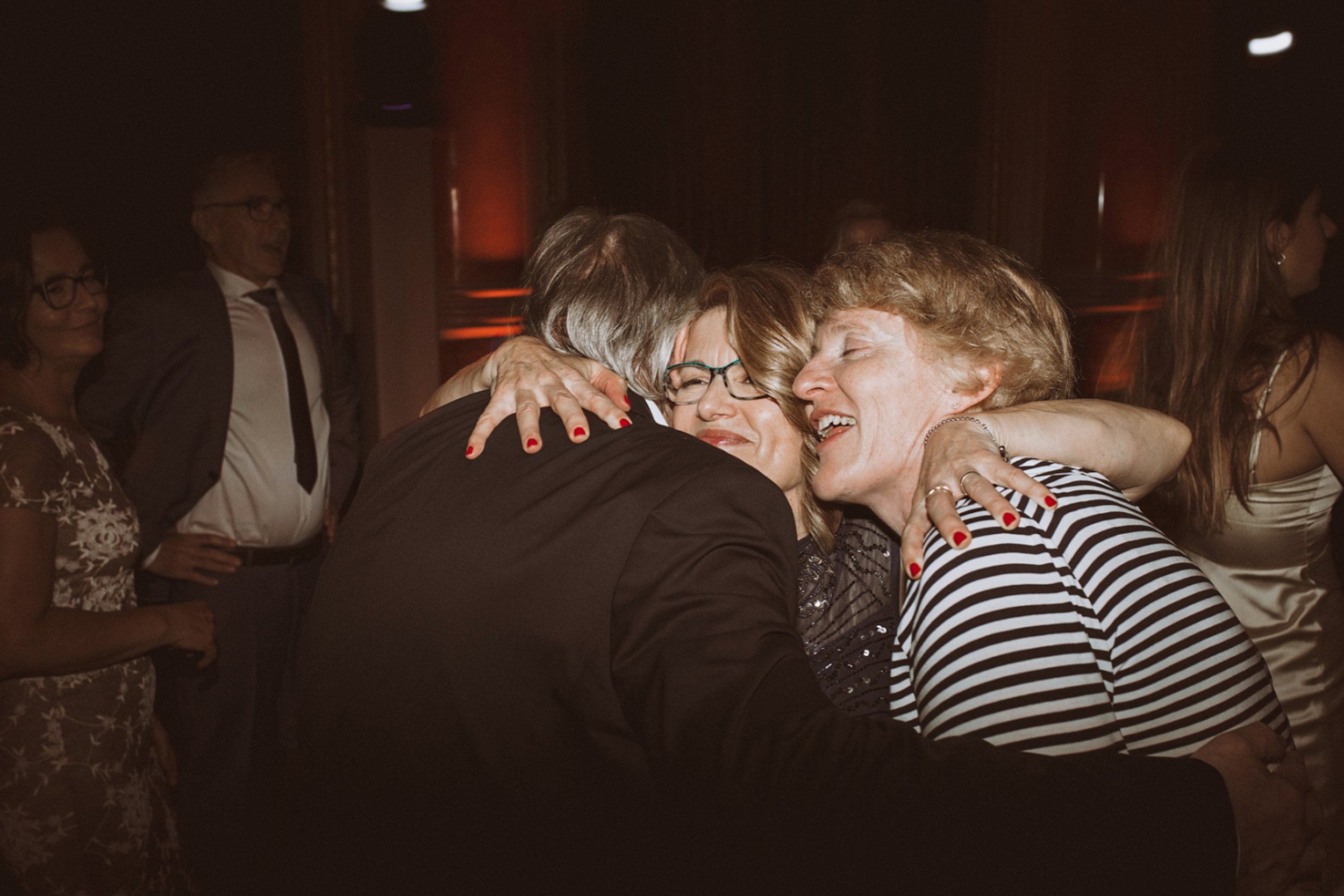
A heavy-handed flash can make any dark room readable, but it also flattens the atmosphere — the string lights, the candlelight, the moody uplighting your venue chose on purpose all disappear behind a wall of direct flash. Shooting true to the room means your dance floor still looks like your dance floor: the ambient lighting your venue built stays visible, faces stay lit without going flat, and the energy of the room comes through instead of getting erased by an on-camera flash.
It's a more technical approach than pointing a flash straight ahead and hoping for the best. It requires:
Bounced or diffused flash, adjusted room by room rather than fired directly at every subject
Balancing flash against ambient light — string lights, uplighting, candles, and stage lighting often all exist in the same frame and need to read naturally together
Fast, deliberate shutter and ISO choices that freeze motion on a dance floor without pushing so much noise into the image that detail disappears
.
Why This Matters Especially on a Crowded Dance Floor
This is the part of low-light event photography that separates experienced photographers from amateurs fastest. A dark, moving, crowded room compounds every challenge at once:
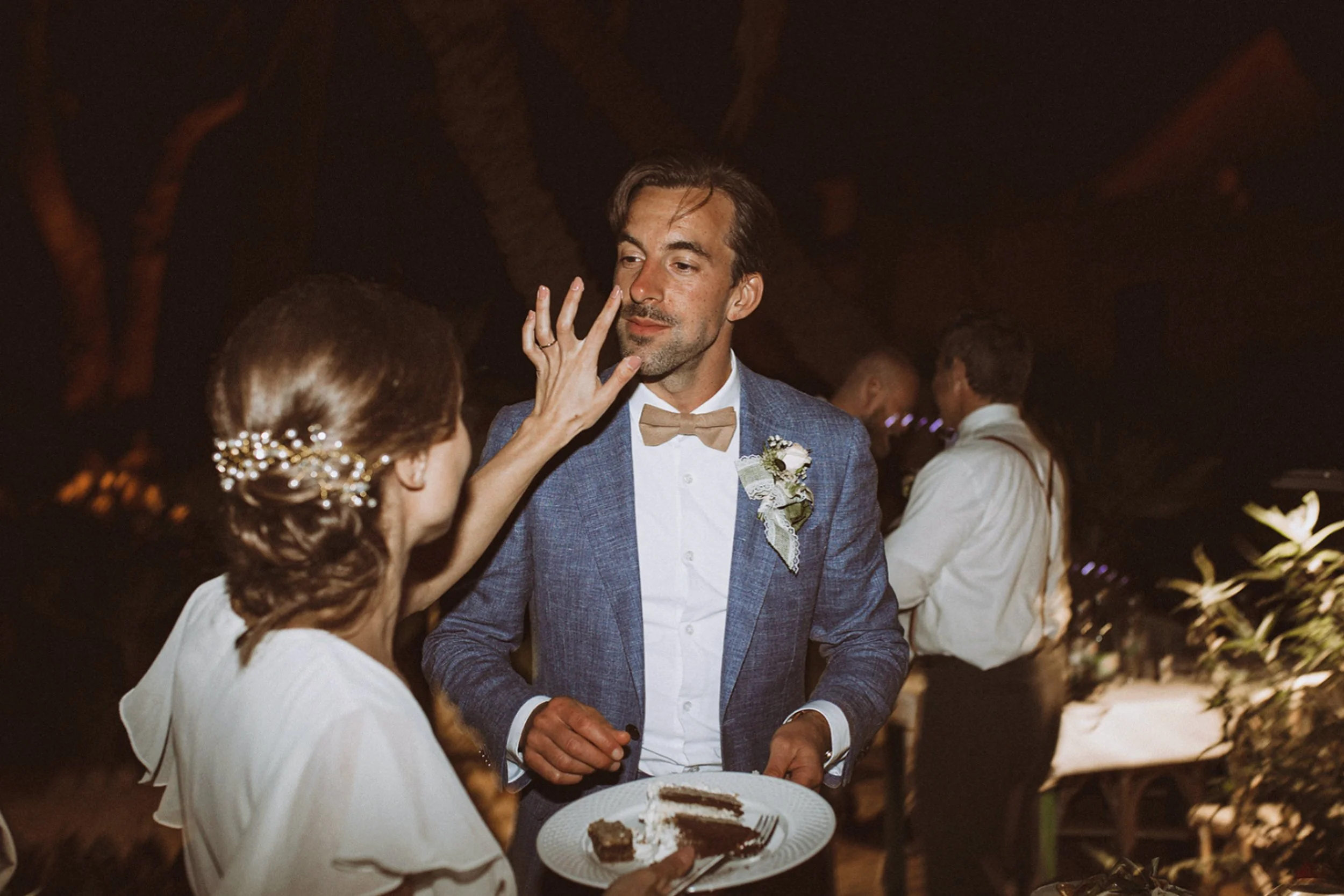
Motion blur. Guests dancing, spinning, and moving make freezing a sharp, natural-looking moment far harder than a posed portrait — it takes practiced shutter speed and timing, not luck.
Uneven exposure across a group. Flash falls off quickly with distance, so people at the front of a shot can blow out white while people just a few feet back go dark — balancing that across a moving crowd takes real skill.
Presence. You're pointing a flash at people's faces while they're having fun, and if you're not careful about how and when you do it, you become the reason the energy dips. The goal is to capture the room without anyone feeling like they're being photographed.
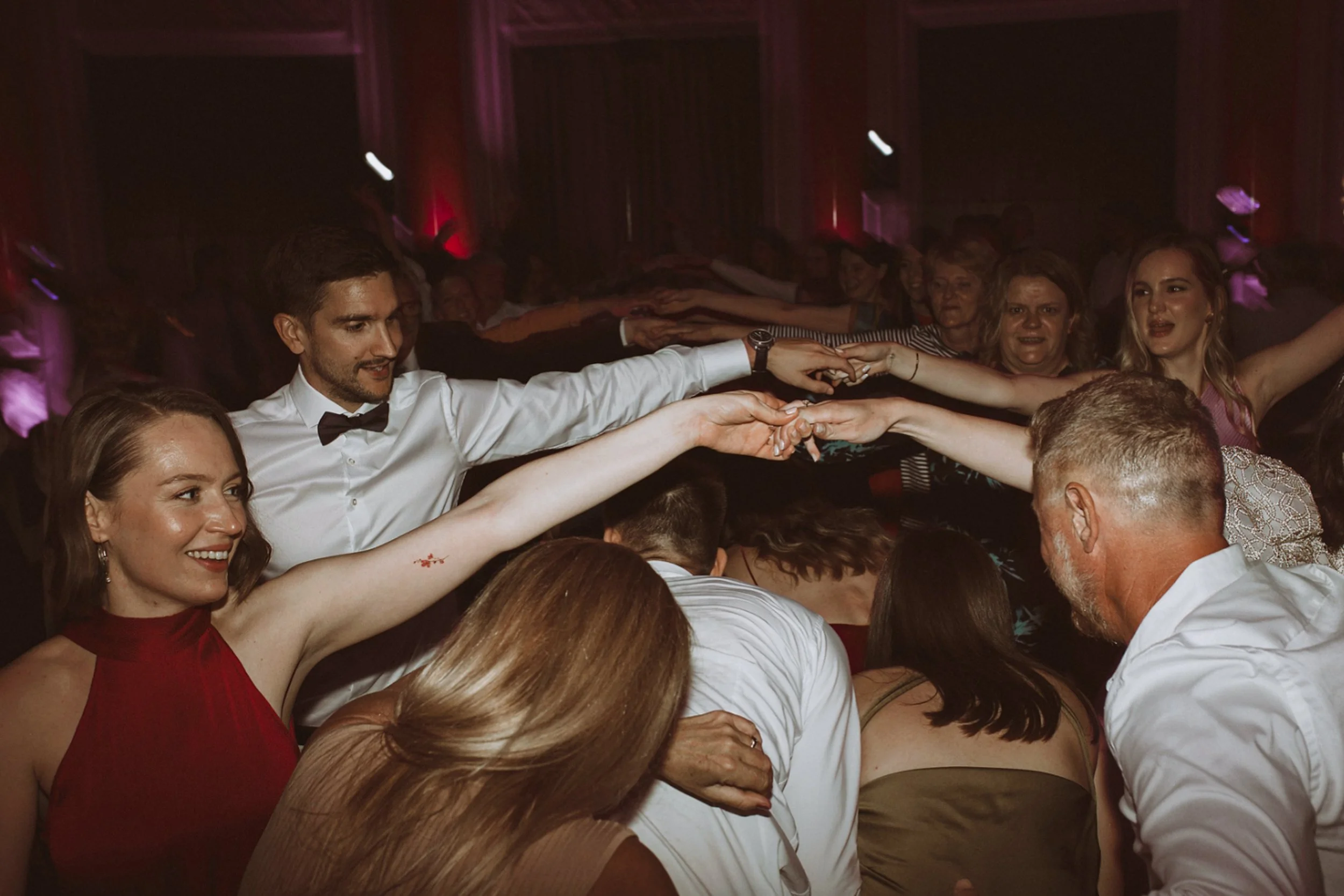
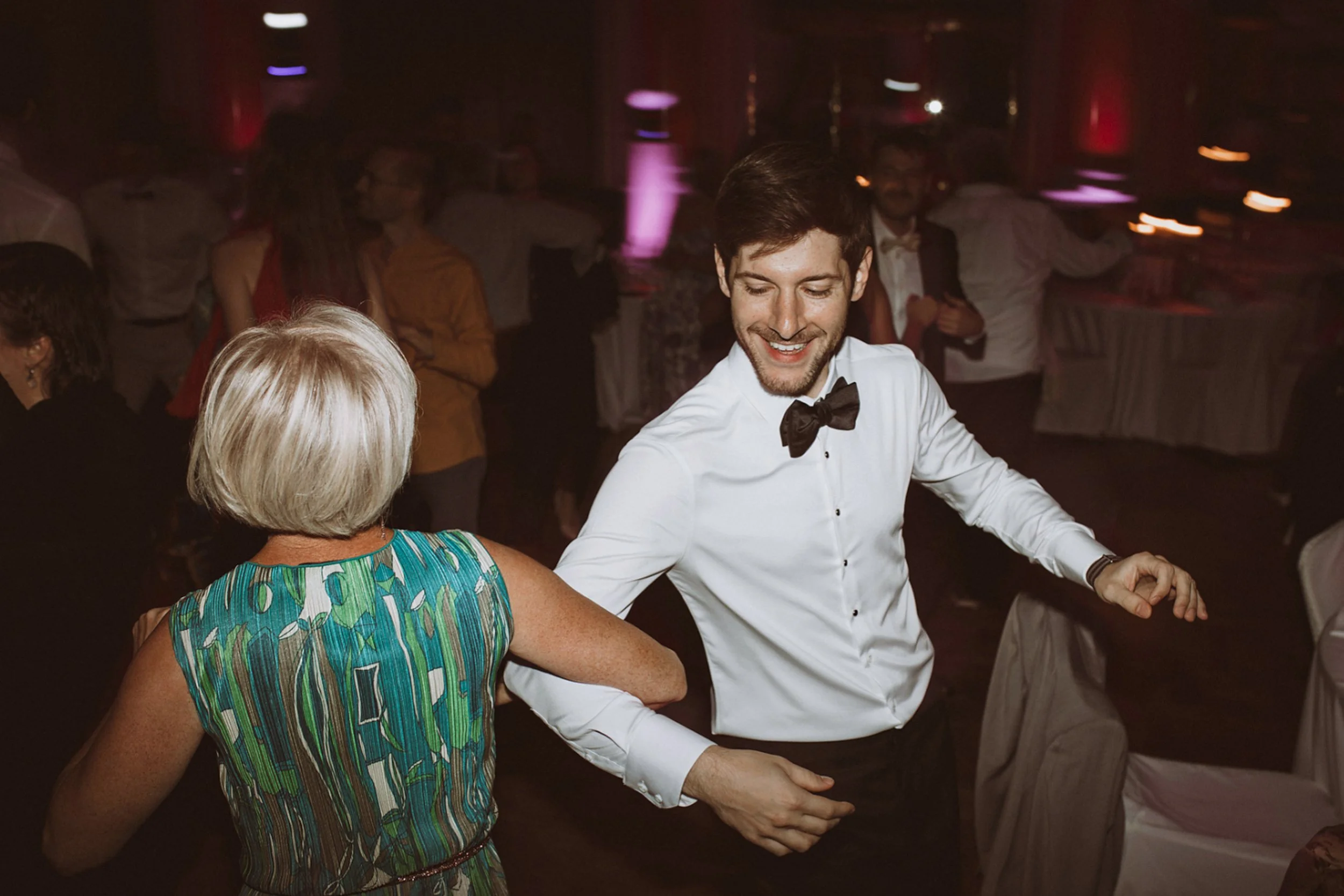
Shooting true to the room means every guest — under string lights, DJ lighting, or a dim reception hall — looks like they did that night. Not blown out, not lost in shadow, not flattened by direct flash. That takes deliberate technical work: bounced and diffused lighting, exposure choices that hold detail across a crowd, and enough practice reading a room to know when to use flash at all.
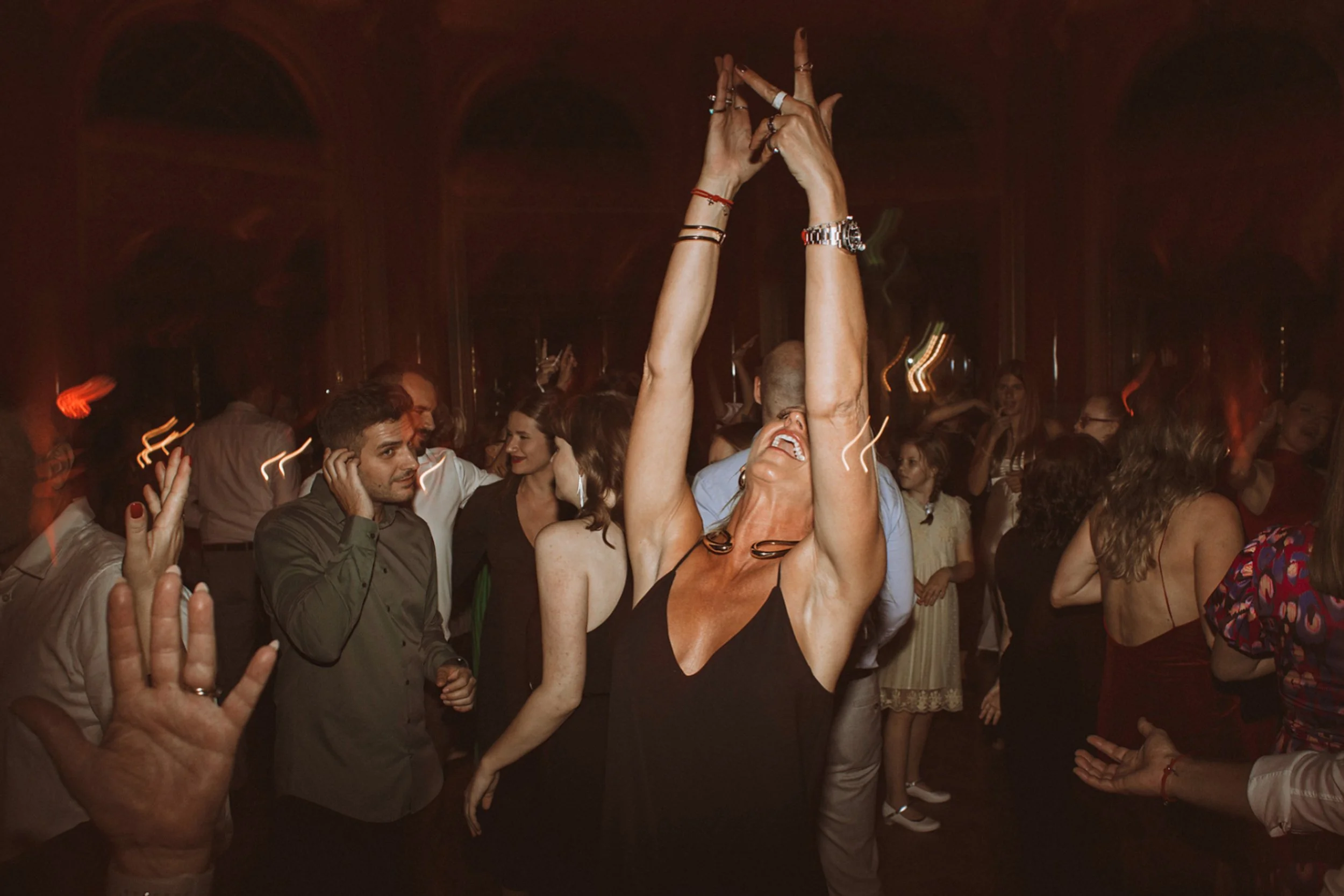
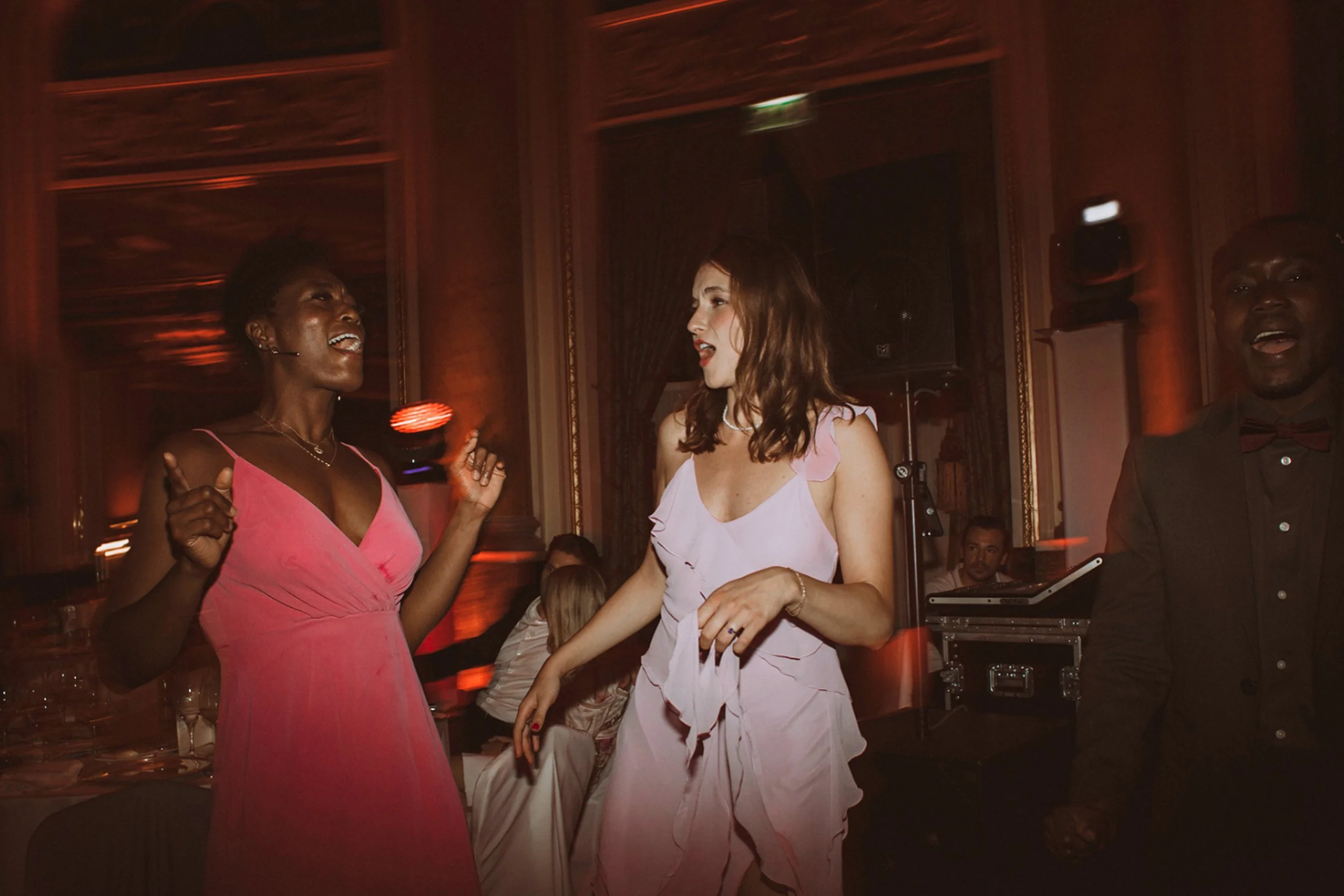
Flash Keeps Skin Tones Accurate
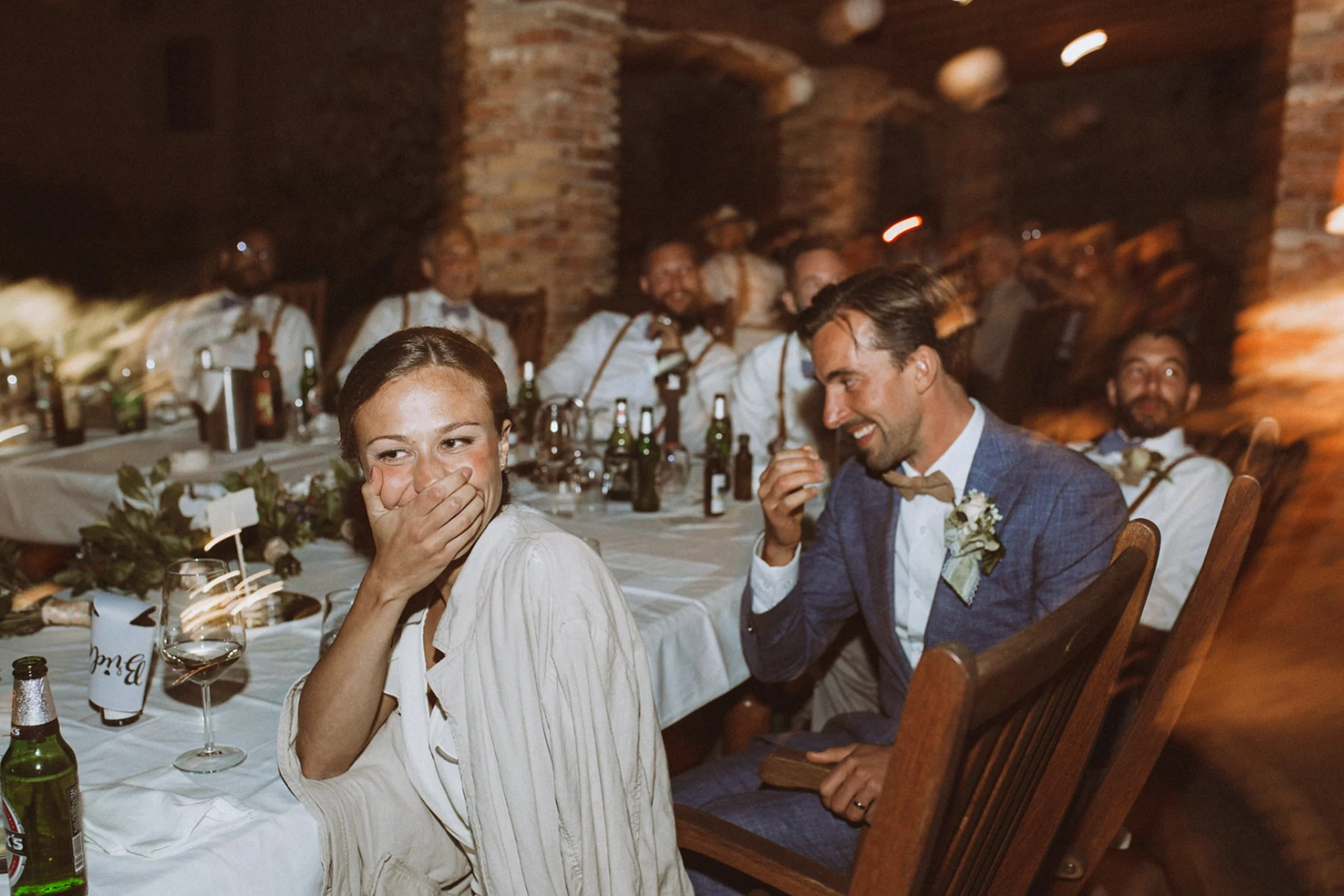
This is a technical point that gets missed a lot: flash isn't just about adding brightness to a dark room, it's about color accuracy. Flash is daylight-balanced. Most room lighting at a reception — string lights, chandeliers, sconces, candlelight — is tungsten, which reads warm, orange, and often uneven from one part of the room to another.
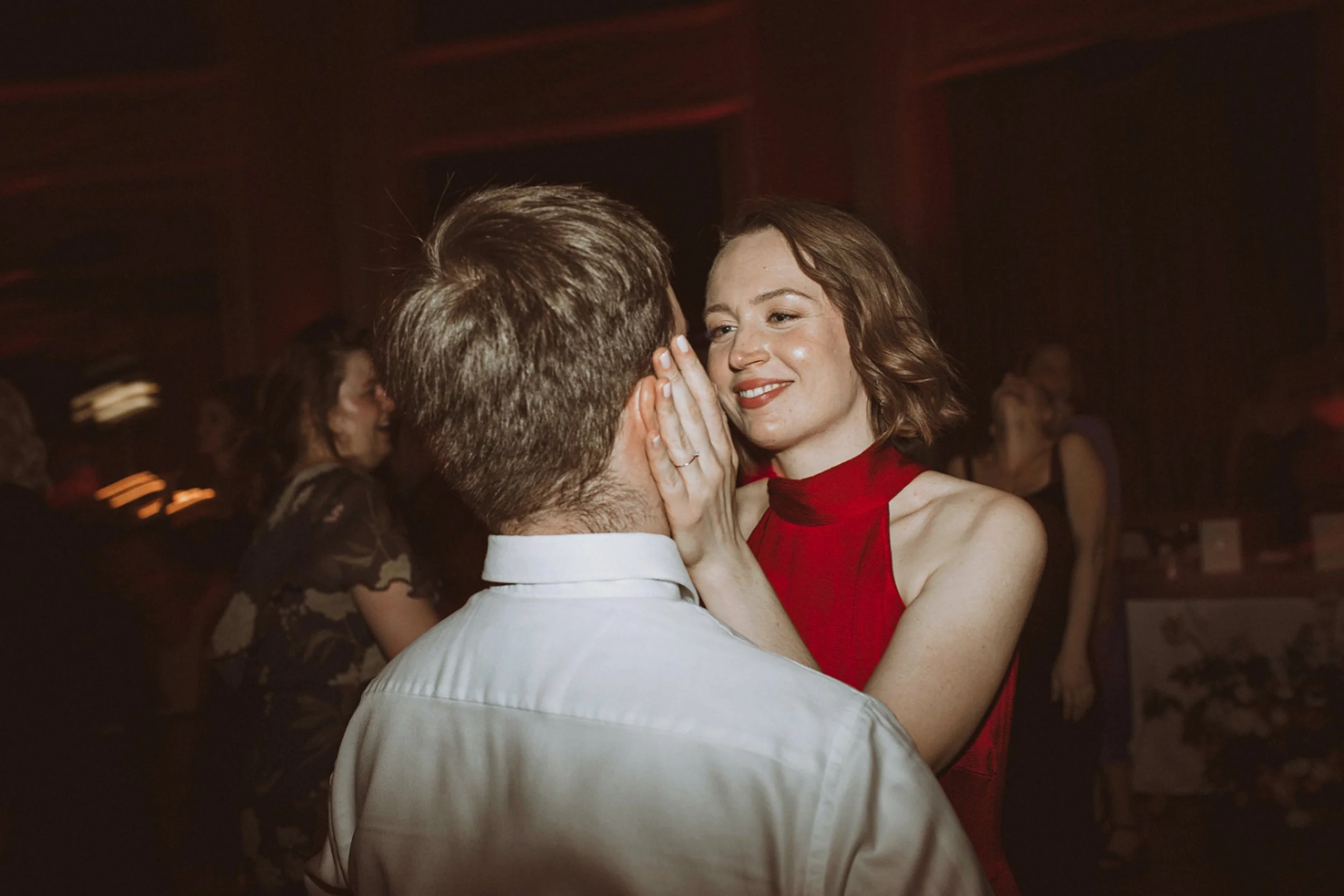
If a photographer shoots faces lit only by that ambient tungsten light, skin tones shift warm and inconsistent — sometimes orange, sometimes muddy, depending on how close someone is to the nearest light source. Add flash into the mix at the right ratio, and it does something ambient light alone can't: it puts a consistent, daylight-balanced light on the face, which is what keeps skin tones reading true regardless of what color the room around them is.
This is the same true-to-color principle we've written about before, applied specifically to low light: the goal isn't to override the room's warm, tungsten atmosphere — it's to make sure the people in the photo aren't lost inside it. A well-balanced flash lets the background hold its warm, ambient glow while the face in the foreground stays accurately exposed and accurately colored. Without that balance, you're choosing between a warm, atmospheric room with orange-tinted faces, or a room that's been flattened and color-corrected into something that no longer looks like it actually did.
This is exactly the philosophy behind our work at Living Pictures. As a documentary wedding photography team based in San Francisco, we shoot candid, natural moments throughout the Bay Area — and low light is where we do some of our favorite work. Our team — Barbara, Ana, JJ, and Shaylyn — brings the same technical standard to every dimly lit reception we cover, bold and cinematic without losing what the room actually looked like.
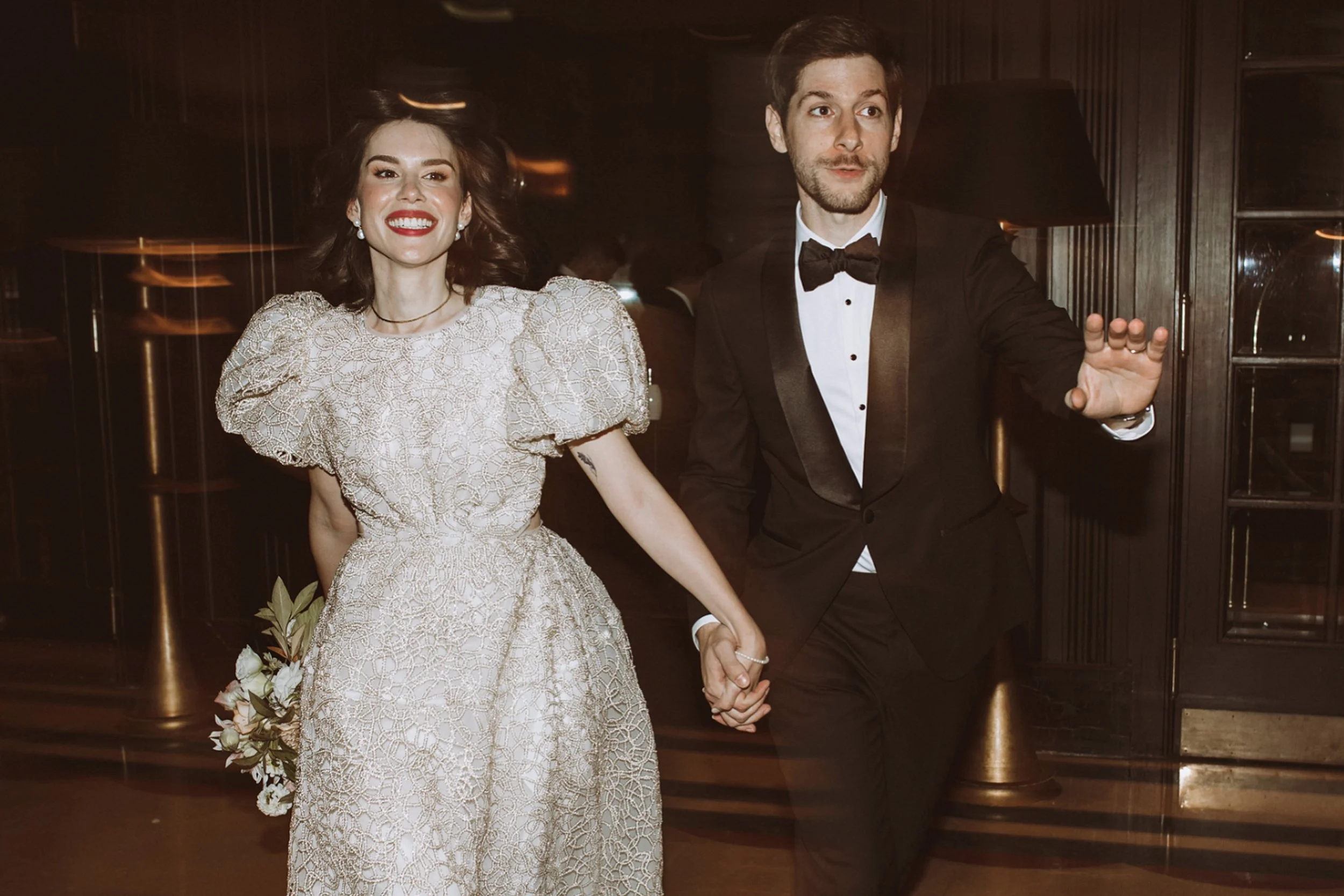
How We Actually Catch the Moment on the Dance Floor
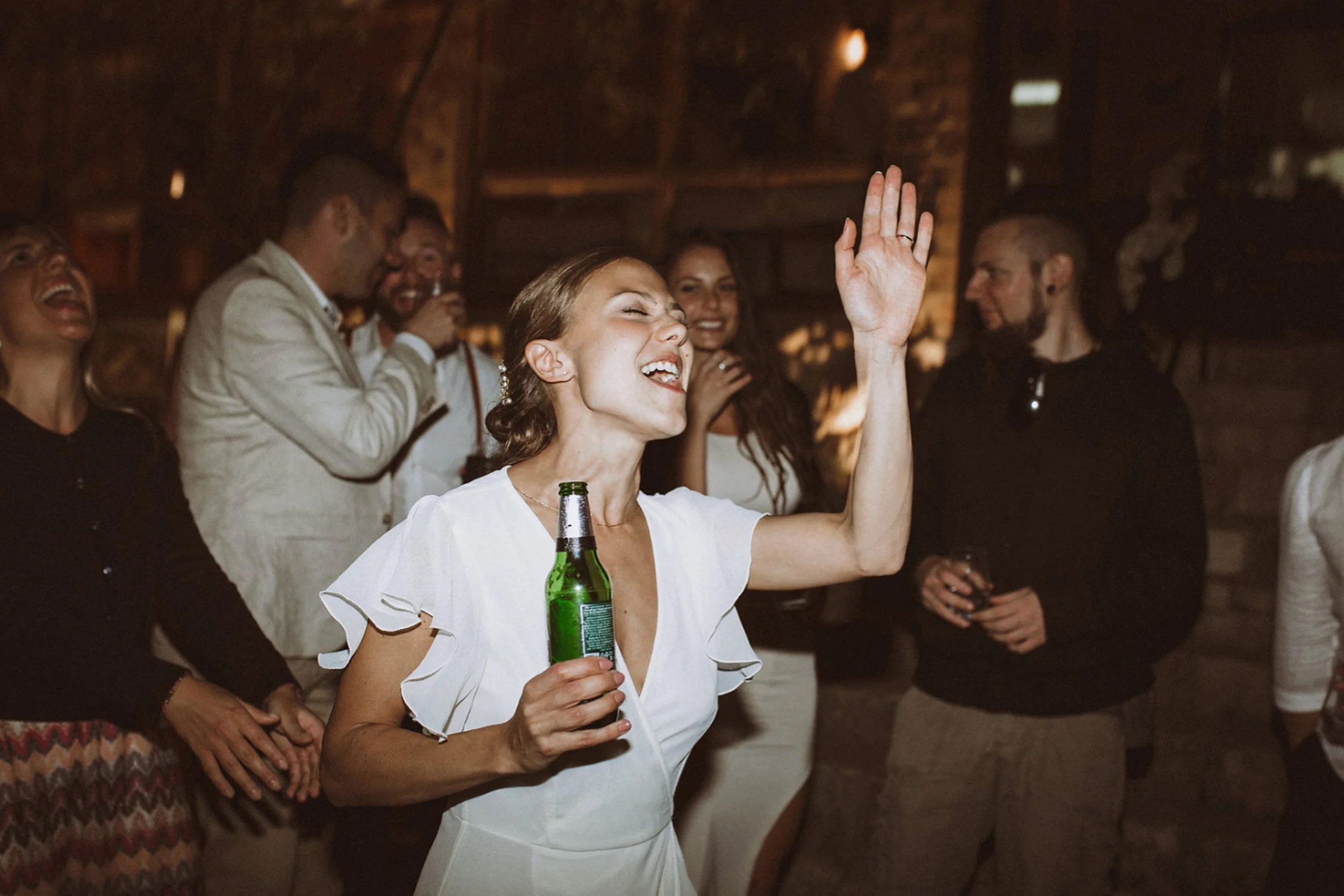
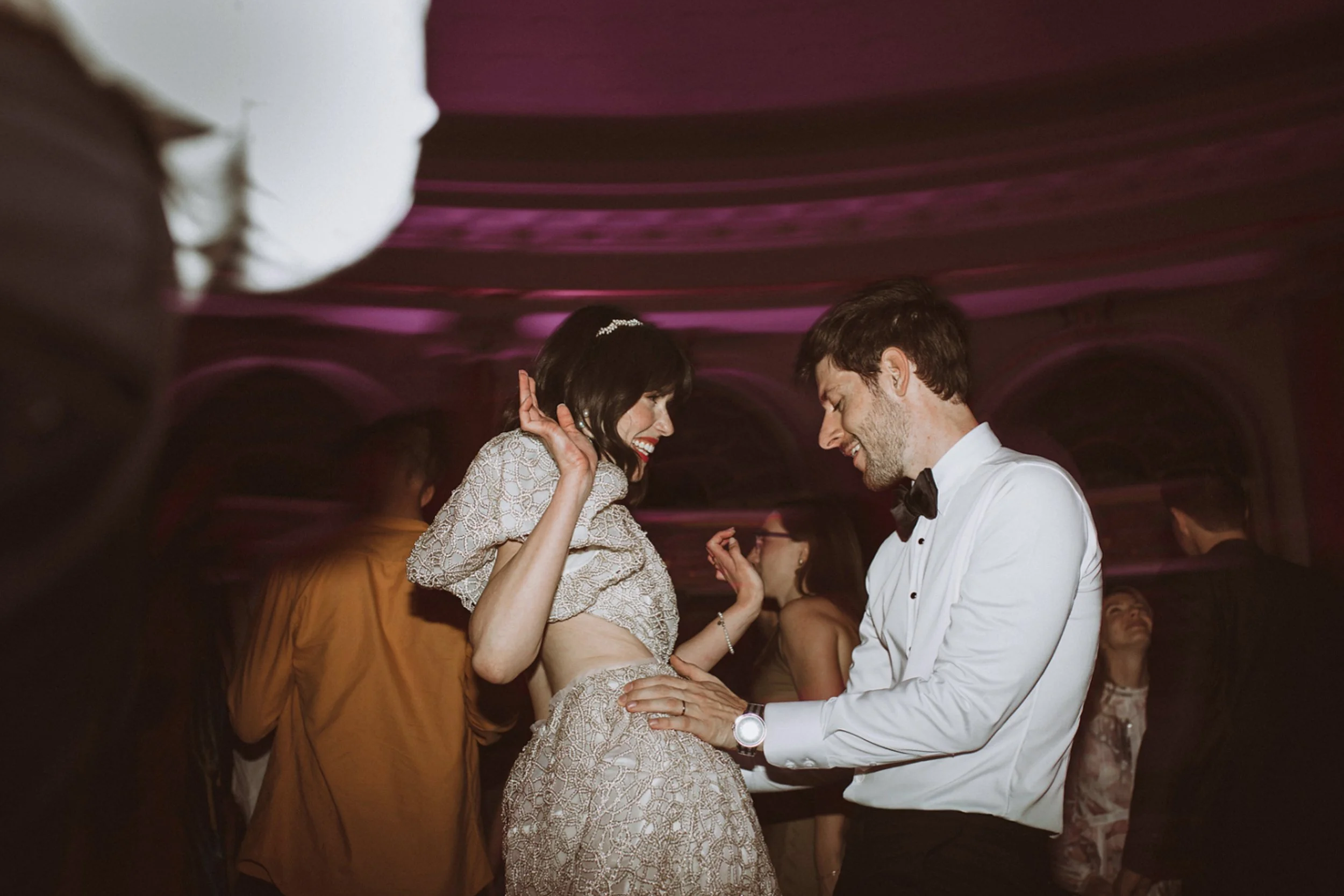
Technique solves the color and exposure problem, but there's a second challenge that's just as important: getting real, unposed energy out of a room once the lighting is handled. Our approach is to dance with the guests. Not stand at the edge with a camera and a flash, but actually move into the crowd — get in, melt in, become part of the room instead of something guests are performing for.
The key is not to camp out on one person or one group. Flashing the same people over and over makes them self-conscious, and self-conscious guests stop giving you real moments — they start posing, or worse, avoiding the camera. Instead, we move quickly: in for a few frames, then on to the next group, circling back later once the moment has reset. That constant movement is what lets the actual fun keep happening instead of pausing every time a camera points somewhere.
Frequently Asked Questions
Do you need a lot of flash equipment to shoot a dark reception well? Not necessarily more equipment — it's more about how the flash is used. Bounced, diffused light balanced against the room's existing ambient lighting produces far more natural results than a single direct on-camera flash.
Will low-light photos still look bright and clear, or are they always a little dark and grainy? They can be both natural and clean. Good low-light technique holds detail and clarity without needing to blast the room with flash or push ISO so high that noise takes over.
Can a photographer shoot a whole reception without using flash at all? Sometimes, in venues with strong ambient lighting, but most dimly lit spaces need at least some fill flash to keep faces readable — the skill is in making that flash invisible rather than avoiding it entirely.
How do you keep dance floor photos from looking posed or startled by flash? By moving with the room instead of stationing at the edge, using diffused rather than direct flash, and timing shots to genuine movement rather than stopping guests to pose.
Why does flash matter if the room already has plenty of ambient light? Room lighting is usually tungsten and reads warm or orange, while flash is daylight-balanced. Without flash, skin tones can shift warm and inconsistent depending on how close someone is to a light source — flash keeps faces accurately exposed and true to color while the room around them keeps its natural warm atmosphere.
